Rating Thresholds Enabling Access to Progressive Features in Member-Driven Platforms
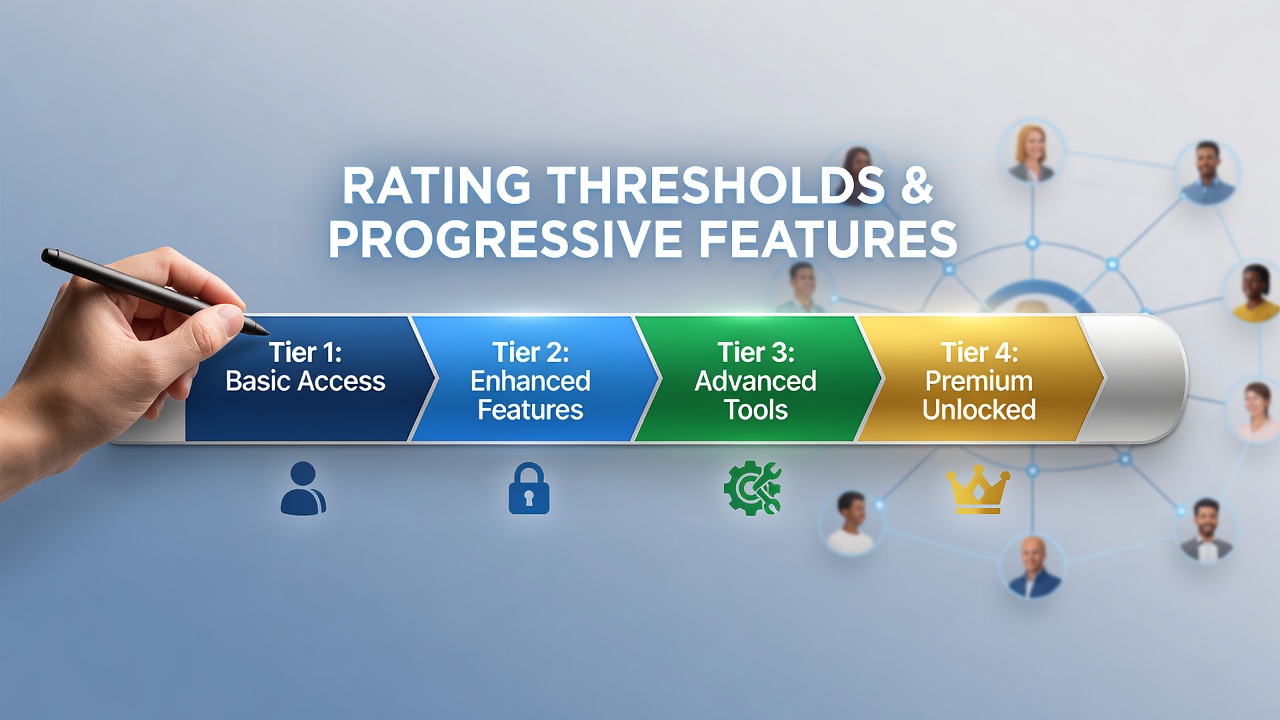
Rating thresholds function as structured gateways in member-driven platforms where accumulated user evaluations determine eligibility for advanced tools and capabilities, and observers note that these systems operate through tiered point accumulation tied directly to participation metrics such as content contributions, interaction frequency, and peer validations.
Mechanics of Threshold Implementation
Platforms establish numerical benchmarks that members must surpass before gaining entry to enhanced functionalities, while data from industry reports indicates that a typical progression model begins at entry-level access with basic posting rights and escalates through intermediate stages granting moderation privileges or custom interface options once ratings reach specified counts like 500 or 1,000 validated interactions. Researchers at institutions including the University of Melbourne have documented how these thresholds integrate algorithmic scoring that weights recent activity more heavily than historical contributions, creating dynamic pathways that adjust in real time based on platform-wide engagement patterns observed through June 2026.
Multiple platforms apply weighted criteria where quality indicators such as helpfulness votes or detailed feedback responses multiply base point values, and this approach allows high-performing members to accelerate their advancement compared to those accumulating volume alone without corresponding quality markers.
Progressive Features Unlocked at Each Level
Entry-level thresholds commonly unlock profile customization and basic analytics dashboards, whereas mid-tier ratings around 2,000 points often activate collaborative editing suites and priority support channels according to analyses from the European Commission's digital services monitoring group. Higher thresholds exceeding 5,000 combined ratings grant access to revenue-sharing modules, exclusive community events, and data export capabilities that enable members to leverage their network influence for external projects.
One documented case involved a European knowledge-sharing network that introduced rating-based unlocks in early 2025, resulting in a 34 percent increase in sustained member activity tracked through the following year as reported in aggregated platform statistics. Members crossing successive thresholds gained progressively sophisticated recommendation engines that suggested tailored collaboration opportunities based on historical interaction data.
Regional Variations in Threshold Design
Platforms operating under Australian regulatory frameworks tend to incorporate transparency requirements that disclose exact point formulas to all members, whereas North American systems frequently emphasize competitive elements that display leaderboard positions alongside threshold progress bars. Canadian digital policy reviews released around June 2026 highlighted how these regional differences affect cross-border member migration patterns, with users gravitating toward systems offering clearer milestone visibility.
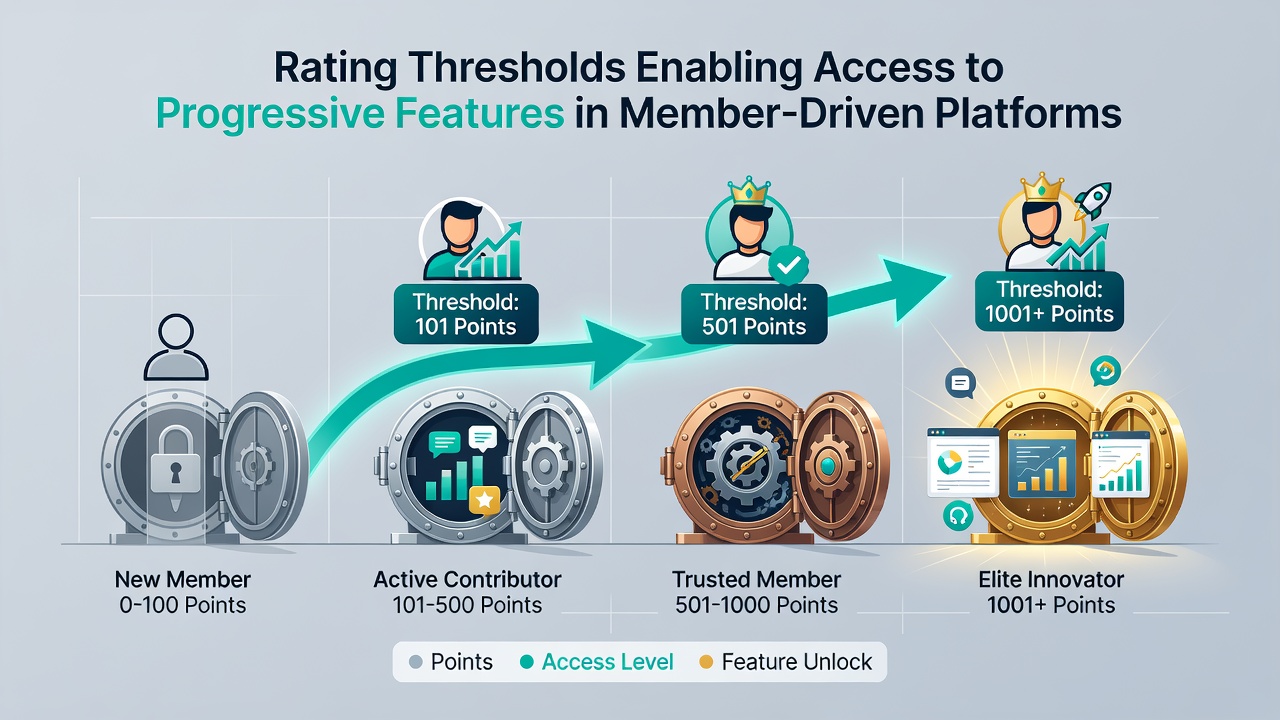
Threshold calibration varies by platform scale as well, with smaller niche communities setting lower entry points to encourage initial growth while larger networks raise benchmarks to maintain quality control over expanded feature sets. Evidence from academic studies shows that platforms adjusting thresholds quarterly based on engagement analytics achieve more stable retention rates than those maintaining static values over extended periods.
Integration with Platform Governance
Rating thresholds often connect directly to governance mechanisms where elevated members receive voting rights on policy changes or content moderation decisions, and industry organizations such as the Interactive Digital Media Association have tracked how these integrations strengthen community self-regulation. Members reaching advanced tiers frequently participate in beta testing for upcoming features, providing feedback loops that inform subsequent platform iterations released throughout 2026.
Security protocols tied to rating levels add another dimension, granting higher-tier members additional verification layers for sensitive account functions while restricting certain data access until thresholds are met. This layered approach reduces unauthorized activity according to aggregated security reports from multiple platform operators.
Conclusion
Rating thresholds continue to shape access patterns across member-driven platforms by aligning feature availability with demonstrated engagement levels, and ongoing data collection through mid-2026 reveals consistent correlations between threshold clarity and overall participation depth. Platforms refining these systems based on regional regulatory guidance and usage analytics maintain structured progression that supports both individual advancement and collective platform health.